
How Long Does a Wheel Alignment Take?
How Long Does a Wheel Alignment Take?
If you’ve been told your vehicle needs an alignment, one of the first questions you’re probably asking is, “How long is this going to take?”
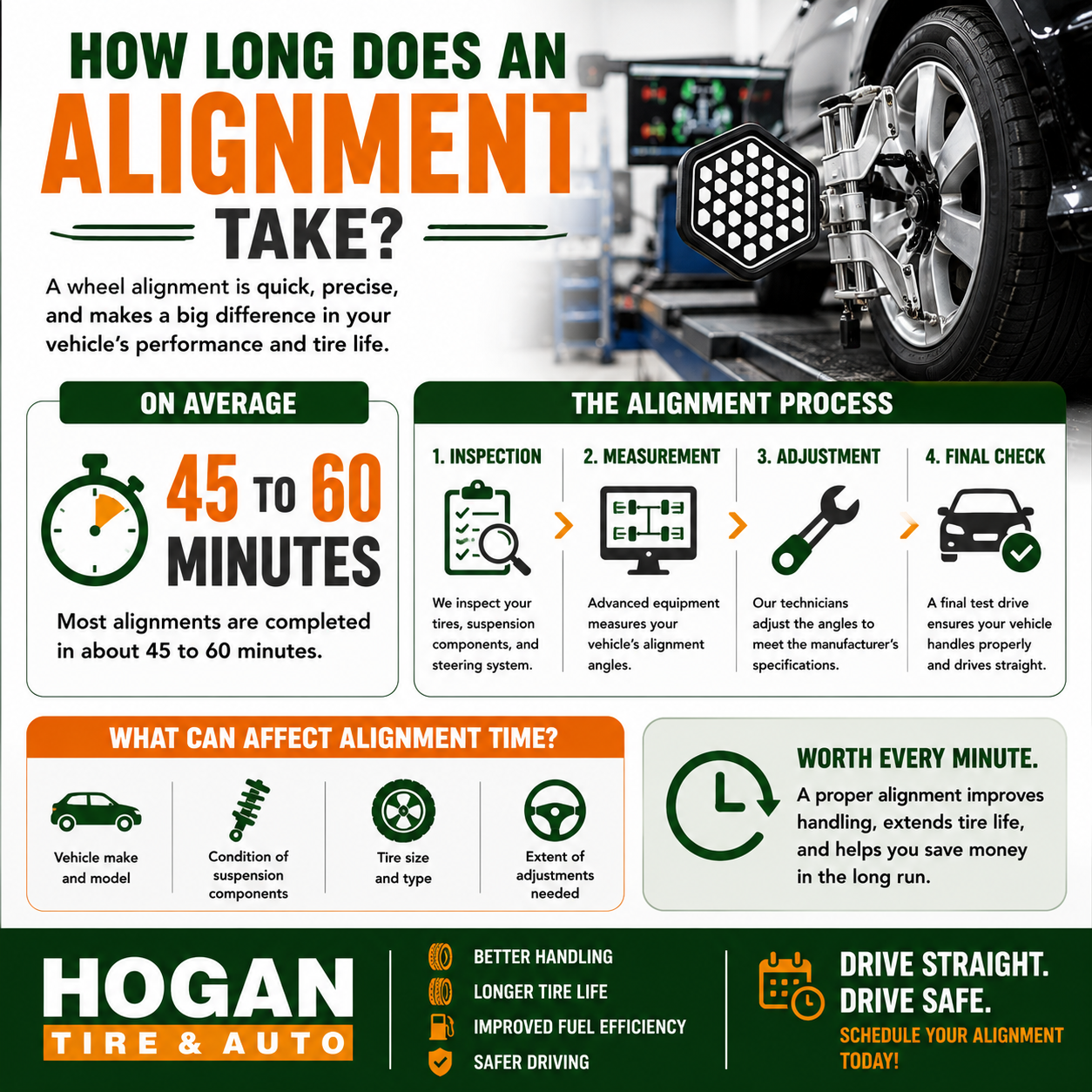
For most vehicles, a wheel alignment takes between 30 minutes and one hour. In many cases, you can wait comfortably at the shop and be back on the road the same day.
However, that answer only tells part of the story.
Some alignments are completed in less than 30 minutes. Others can take two hours or more. The difference usually comes down to your vehicle’s condition, the type of suspension system it uses, and whether technicians uncover underlying problems during the inspection process.
Understanding what affects alignment time can help you plan your visit, avoid surprises, and better understand why a proper alignment is one of the most important services for tire life, steering performance, and overall vehicle safety.
Quick Answer: How Long Does a Wheel Alignment Take?
Typical passenger vehicle: 30 to 60 minutes
SUVs and light trucks: 45 to 90 minutes
Vehicles with suspension problems: 1 to 2+ hours
Vehicles requiring repairs before alignment: Several hours or additional appointments
Most customers at Hogan Tire & Auto can have their alignment completed during a single visit. However, if technicians discover worn steering or suspension components, those repairs must usually be completed before the alignment can be finalized.
Why Doesn’t Every Alignment Take the Same Amount of Time?
Many drivers assume a wheel alignment is simply hooking a vehicle up to a machine and pushing a few buttons.
In reality, a proper alignment involves inspecting multiple vehicle systems before any adjustments are made.
Technicians must verify that the steering and suspension systems are in good condition, measure current alignment angles, make precise adjustments, and confirm that the final readings meet manufacturer specifications.
If anything prevents those adjustments from being made correctly, the process takes longer.
What Happens During a Wheel Alignment?
A modern computerized alignment typically involves several steps.
Initial Inspection
Before technicians adjust anything, they inspect the vehicle for problems that could affect alignment accuracy.
This often includes checking:
- Tire condition
- Tire pressure
- Suspension components
- Steering components
- Wheel bearings
- Ride height
If a tie rod, ball joint, control arm, or wheel bearing is worn, the vehicle may not hold alignment settings properly.
Alignment Measurements
Alignment sensors are mounted to the wheels and connected to computerized equipment.
The system measures:
- Camber
- Caster
- Toe
- Thrust angle
- Steering axis inclination on some vehicles
The machine then compares those measurements to factory specifications.
Alignment Adjustments
Technicians adjust suspension and steering components until the vehicle falls within the manufacturer’s acceptable range.
This step often takes the most time, particularly if adjustments are difficult to access or heavily corroded.
Final Verification
After adjustments are complete, technicians verify the final readings and ensure the steering wheel is properly centered.
Many shops also perform a road test when necessary.
Can I Wait While My Alignment Is Being Done?
In most cases, yes.
Many alignments are completed while customers wait.
If your vehicle is mechanically sound and no repairs are needed, there is a good chance you’ll be back on the road within an hour.
However, if technicians discover worn suspension parts, damaged steering components, or seized adjustment hardware, additional repairs may be necessary before the alignment can be completed.
Why Do Some Shops Quote 30 Minutes While Others Quote an Hour?
The difference often comes down to the inspection process.
A quality alignment isn’t just about adjusting numbers on a screen.
Experienced technicians will inspect suspension and steering components before making adjustments because alignment readings can be affected by worn parts.
A shop that spends extra time inspecting your vehicle may take slightly longer, but they’re also more likely to identify the real cause of your handling or tire wear issues.
What Can Make an Alignment Take Longer?
Several factors can extend alignment time beyond the typical 30-to-60-minute window.
Worn Suspension Components
One of the most common delays involves suspension wear.
Technicians frequently discover problems such as:
- Worn tie rods
- Loose ball joints
- Damaged control arms
- Worn bushings
- Failing struts
These components directly affect wheel position. If they are worn, an alignment may not hold properly.
Rust and Corrosion
In Massachusetts, road salt creates challenges that drivers in warmer climates rarely experience.
Alignment adjustments often require turning threaded sleeves, eccentric bolts, or adjustment cams.
After years of exposure to moisture and road salt, these components can become:
- Rusted
- Frozen
- Difficult to adjust
Freeing them safely can add significant time to the process.
Severe Misalignment
A vehicle that is slightly out of alignment can usually be corrected quickly.
However, vehicles with severe alignment problems may require additional diagnosis.
Examples include:
- Steering wheel significantly off-center
- Vehicle pulling aggressively
- Suspension damage from potholes
- Accident-related damage
- Bent suspension components
These situations require more time because technicians must determine why the alignment is so far out of specification.
Lifted or Modified Vehicles
Lift kits, lowering kits, oversized tires, aftermarket suspension components, and custom wheels often require additional adjustment time.
Some modified vehicles have limited adjustment ranges, making it more difficult to achieve factory specifications.
Does Getting New Tires Increase Alignment Time?
Not usually.
In fact, many drivers combine tire installation and alignment during the same appointment.
This is often recommended because alignment problems are one of the leading causes of premature tire wear.
Installing new tires without correcting a known alignment issue can result in:
- Feathering
- Inside edge wear
- Outside edge wear
- Reduced tire life
Many technicians consider alignment one of the smartest investments when purchasing a new set of tires.
How Long Does an Alignment Take Compared to a Tire Rotation?
A tire rotation is significantly faster.
Typical tire rotation time:
15 to 30 minutes
Typical alignment time:
30 to 60 minutes
A tire rotation simply changes tire positions to promote even tread wear.
An alignment adjusts the actual suspension geometry of the vehicle.
While both services help maximize tire life, only an alignment corrects steering and handling issues.
Can a Wheel Alignment Be Done After Hitting a Pothole?
Yes, and it often should be.
Potholes are one of the most common causes of alignment problems.
Even a single impact can alter suspension geometry enough to cause:
- Vehicle pulling
- Crooked steering wheel
- Uneven tire wear
- Handling issues
If you notice any of these symptoms after striking a pothole, an alignment inspection is a smart next step.
How Often Should a Wheel Alignment Be Performed?
Most manufacturers recommend alignment inspections every:
- 6,000 to 10,000 miles
- Once per year
You should also have alignment checked when:
- Installing new tires
- Replacing suspension components
- Replacing steering components
- Hitting a curb
- Hitting a pothole
- Noticing uneven tire wear
- Experiencing vehicle pulling
Many alignment problems develop gradually, which is why routine inspections are valuable.
What Happens If You Wait Too Long?
Many drivers delay alignment service because the vehicle still feels drivable.
Unfortunately, alignment issues rarely improve on their own.
Over time, poor alignment can cause:
Premature Tire Wear
This is often the most expensive consequence.
A vehicle that is significantly out of alignment can destroy a tire thousands of miles before its expected lifespan.
Poor Fuel Economy
Misaligned wheels create additional rolling resistance.
The engine must work harder to move the vehicle, which can reduce fuel efficiency.
Steering Problems
As alignment worsens, steering may become:
- Less responsive
- More difficult to control
- Less predictable at highway speeds
Suspension Wear
Improper alignment places additional stress on suspension and steering components, potentially leading to more costly repairs.
Is an Alignment Worth It?
Absolutely.
Compared to the cost of replacing tires prematurely, wheel alignment is one of the most cost-effective maintenance services available.
A proper alignment helps:
- Extend tire life
- Improve fuel economy
- Improve handling
- Reduce steering wear
- Increase driving comfort
- Improve safety
For most drivers, the service pays for itself through longer tire life alone.
The Bottom Line
Most wheel alignments take between 30 and 60 minutes, but the actual time depends on your vehicle’s condition.
If suspension and steering components are healthy, the process is relatively quick. If technicians discover worn parts, severe misalignment, or corrosion-related issues, additional time may be needed to complete the job properly.
The most important thing isn’t finding the fastest alignment. It’s finding one that’s done correctly.
At Hogan Tire & Auto, our technicians use advanced computerized alignment equipment and perform thorough inspections to ensure your vehicle tracks straight, handles properly, and gets the maximum life from your tires. Whether you’re dealing with uneven tire wear, a crooked steering wheel, or a vehicle that pulls to one side, we’ll identify the cause and help get you back on the road with confidence.